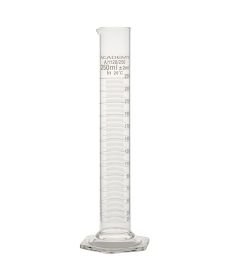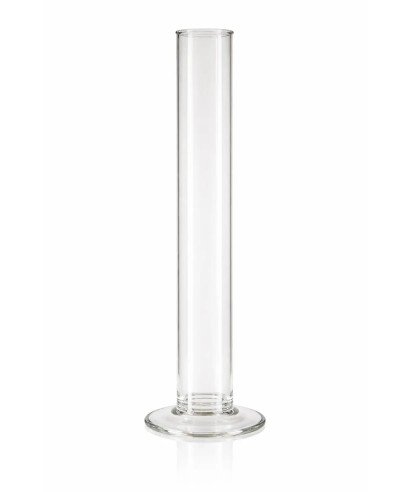
300ml ungraduated glass cylinder for density and alcohol content measurements using hydrometers and alcohol meters.
Manufactured from transparent borosilicate glass, offering good thermal and chemical resistance.
The ungraduated design ensures clear readings without visual interference.
Round base for improved stability and a smooth rim for safe pouring and handling.
Optimised dimensions for standard laboratory instruments.
300ml ungraduated glass cylinder for density and alcohol content measurements using hydrometers and alcohol meters.
Manufactured from transparent borosilicate glass, offering good thermal and chemical resistance.
The ungraduated design ensures clear readings without visual interference.
Round base for improved stability and a smooth rim for safe pouring and handling.
Optimised dimensions for standard laboratory instruments.
300ml ungraduated glass cylinder designed for use with hydrometers and glass alcohol meters in density and alcohol content analysis.
Manufactured from transparent borosilicate glass, it offers good thermal and chemical resistance for laboratory and quality control applications.
Its ungraduated design eliminates visual interference during readings, allowing clearer and more precise measurement with floating instruments.
The round base provides stability during use, while the smooth rim facilitates safe pouring and handling.
Optimised dimensions for standard instruments, suitable for oenological testing, beverage analysis and laboratory use.
• Density measurement using glass hydrometers
• Alcohol content determination with alcohol meters
• Oenological testing and beverage control
• Laboratory analysis and quality control
• Capacity: 300ml
• Type: Ungraduated cylinder
• Material: Transparent borosilicate glass
• Internal diameter: 40mm
• Height: 300mm
• Base: Round
• Rim: Smooth
• Compatibility: Hydrometers and alcohol meters
This cylinder is specifically designed to accommodate floating density instruments without visual distortion or scale interference.
Its narrow geometry and optimised height ensure proper buoyancy of hydrometers and glass alcohol meters, supporting reliable readings.
The use of borosilicate glass ensures durability and resistance to chemical agents and moderate temperature variations.
Good morning:
In response to your enquiry, we need to know the Baumé scale of this chemical product. Once confirmed, we will be able to indicate the correct reference you should purchase together with the glass measuring cylinder, which is 524.017.
To use a hydrometer (aerometer for liquids) in a cylinder:
Grapes do not have "degrees" per se; what is measured is the sugar content in the must, which helps estimate probable alcohol content. We recommend two instruments:
Both options are reliable, but the refractometer is more practical and faster.